
Why You Should Not Weigh Yourself Every Day While Dieting (2026 Guide)
The Daily Scale Trap: Why More Data Isn't Always Better
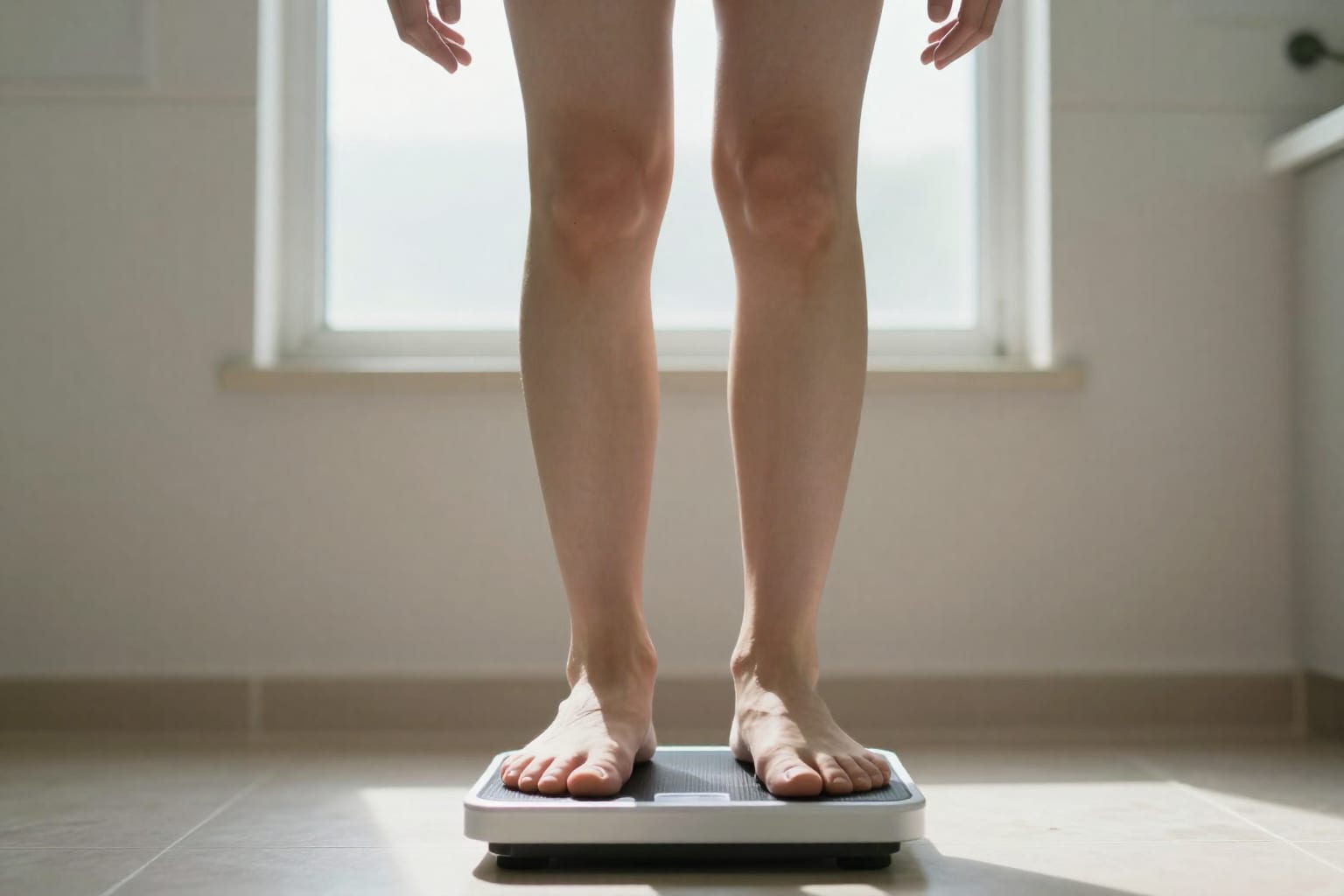
I stepped off the scale one Tuesday morning last year, stared at the number—153.2—and felt my entire morning collapse. The day before it had been 151.8. I hadn't binged, hadn't eaten anything salty, hadn't even had a glass of wine. Yet there I was, 1.4 pounds “heavier,” mentally rewriting my breakfast plans and wondering if I should skip lunch entirely. That moment, standing barefoot on a cold bathroom tile, was when I realized the scale had stopped being a tool and started being a judge. If you're dieting in 2026, you've probably felt this same gut-punch. Here's the counterintuitive truth: weighing yourself every day while dieting can actually make you less likely to reach your goal. More data isn't always better—sometimes it's just more noise.
The Psychology of Daily Weigh-Ins: Anxiety, Obsession, and False Feedback
When I switched to daily weighing, I didn't just track fat—I tracked my mood. A lower number meant I was “good,” a higher number meant I was “bad.” That reward/punishment cycle is exactly what research warns against. A study from the journal Obesity found that daily self-weighing can increase anxiety and depressive symptoms in people who are prone to weight preoccupation. The problem isn't the scale itself—it's what we attach to it. Every morning, you're essentially asking the universe to validate your effort, and the universe, being indifferent, often says “not today.” That false feedback can trigger restriction (skipping meals, cutting calories too low) or, paradoxically, binge eating (feeling defeated and thinking “why bother?”). In my own case, a string of three “bad” weigh-ins led me to eat an entire sleeve of Oreos at 10 p.m., because my brain had already decided the day was a loss. That's not discipline failing; that's psychology failing under a poorly designed feedback system.
The mental toll doesn't stop there. Daily weighing can create what psychologists call “attentional bias”—you start scanning your body for signs of failure, noticing every bloated stomach or tight waistband, which feeds the anxiety loop. For many dieters, the scale becomes a slot machine: sometimes you win (a drop), sometimes you lose (a gain), and the unpredictability keeps you hooked. But unlike a slot machine, the stakes here are your relationship with food and your own body. If you find yourself dreading the scale or celebrating it with food, you're not weak—you're reacting exactly as evolution designed you to. The fix isn't more willpower; it's a better strategy.
One meta-analysis from the International Journal of Obesity compared daily, weekly, and monthly weighing and found that weekly weighing was associated with the best long-term weight loss maintenance without the psychological distress. That's a data point worth bookmarking before your next weigh-in.
The Science of Daily Fluctuations: Why That Number Means Nothing
Here's the physiological reality: your body weight can swing 2 to 5 pounds in a single day for perfectly normal reasons. Water retention from sodium (that burrito bowl yesterday), glycogen storage (carbs hold water), food volume (you haven't pooped yet), and hormonal shifts (especially for women) all play a role. Fat loss, by contrast, happens at a rate of about 0.5 to 2 pounds per week—if you're lucky. So when you see a daily fluctuation, you're not seeing fat loss; you're seeing your body's fluid and digestive dynamics. It's like checking your bank balance every hour and panicking when it drops by $50 because you bought lunch—but the rent hasn't been paid yet.
To make this concrete: let's say you weigh 160 pounds. You eat a high-carb dinner (pasta, bread), drink a glass of water before bed, and wake up with a full bladder and a colon that's still processing. Your scale might read 163 the next morning. That's not three pounds of fat—that's glycogen, water, and waste. By the afternoon, after a few bathroom trips and a lower-carb lunch, you could be back to 160.5. If you'd weighed yourself only that morning, you'd have thought you gained three pounds overnight and possibly sabotaged your day. The scale is not a fat meter; it's a snapshot of total body mass at one moment, and that snapshot is useless for daily decision-making.
A Better Way: The Weekly Weigh-In Strategy That Actually Works
After my Oreo incident, I switched to a weekly weigh-in protocol that changed everything. Here's the exact system I use and recommend for 2026:
- Weigh once per week, same day, same time. I pick Friday morning, after using the bathroom, before drinking or eating. Friday works because it's not Monday (too much weekend anxiety) and not Sunday (too likely to reflect a weekend splurge).
- Use a moving average. I log my weekly number in an app (like Happy Scale or Libra) that calculates a trend line over 4–6 weeks. That trend line is the only number I pay attention to. If the trend is heading down, I'm on track.
- Ignore single data points. If a weekly weigh-in is higher than the last, I don't panic—I check the trend. One week is noise; four weeks is signal.
- Contextualize with a small note. I write one sentence: “Had a salty dinner last night,” or “Ate at maintenance this week.” That stops me from interpreting the number as a moral judgment.
This approach is backed by the same meta-analysis mentioned earlier: weekly weighing with trend tracking minimizes psychological harm while still providing accountability. It's not about avoiding reality—it's about seeing reality clearly, without the daily static.
For best results, also check out the best time of day to weigh yourself for accurate results—timing matters more than most people realize.
Beyond the Scale: Better Progress Markers That Don't Mess With Your Head
The most liberating shift I made was learning to trust markers that had nothing to do with the scale. Here are the ones I use, and they've kept me consistent through plateaus and life chaos:
- Measurements: I take waist, hip, and thigh measurements once a month. When the scale stalls, these often drop—fat is leaving, but water or muscle is hiding it on the scale.
- Progress photos: Same pose, same lighting, every four weeks. A visual comparison tells a story that numbers can't.
- How clothes fit: I have a pair of jeans that are snug when I'm maintaining and loose when I'm losing. They never lie.
- Energy and performance: If I'm sleeping better, lifting heavier, or walking faster, I'm winning—regardless of what the scale says.
- Non-scale victories (NSVs): I keep a list: “Ran a mile without stopping,” “Didn't crave sugar after dinner,” “Felt confident in a swimsuit.” These are the real wins.
One concrete example: last September, my scale didn't move for three weeks. I was frustrated, tempted to drop calories further. But my waist measurement had shrunk by half an inch, and my running pace had improved by 15 seconds per mile. I stuck with my plan, and three weeks later, the scale dropped 2.5 pounds. The NSVs had kept me sane. For more ideas, read about 5 non-scale victories that matter more than pounds lost.
If you do hit a real plateau (no movement for 4–6 weeks despite good adherence), don't panic—check our guide on how to break a weight loss plateau (2026 update) for practical steps.
FAQs
Is it ever okay to weigh yourself daily?
Yes, for a small subset of people—those who can detach emotionally from the number and use it as pure data, often under medical supervision or in structured programs. But for the vast majority of casual dieters, the noise, anxiety, and risk of triggering unhealthy behaviors outweigh the benefits. If you find yourself dreading the scale or celebrating it with food, daily weighing is not for you.
What causes the biggest daily weight swings?
Water retention from high sodium or carbohydrate intake, glycogen storage (which binds water), food volume in the digestive tract, hormonal shifts (especially menstrual cycle in women), and bowel movements. These can cause swings of 2–5 pounds. Fat loss is a much slower process—0.5–2 pounds per week—so a single day's number is almost never meaningful for tracking fat change.
How often should I weigh myself instead?
I recommend once per week, on the same day (e.g., Friday morning), under the same conditions (after bathroom, before eating or drinking). Focus on the trend line over 4–6 weeks, not the single data point. This gives you accountability without the daily emotional rollercoaster.
What should I do if the scale hasn't moved in two weeks?
First, check non-scale markers: measurements, photos, how clothes fit, energy levels. Often, progress is happening but the scale is hiding it. Second, review your diet adherence honestly—are you tracking accurately? Third, if everything is on point, consider a small calorie adjustment (100–200 fewer calories) or a diet break (eating at maintenance for a week) to reset hormones. Panic never helps.
Can daily weighing help some people?
Research shows that daily weighing can work for people in structured weight loss programs who have a detached, data-driven mindset and a clear protocol (e.g., same time, same conditions, no emotional reaction). However, this is rare for casual dieters, and the psychological risks—anxiety, obsession, binge triggers—make it a poor default choice. For most, weekly weighing with trend tracking is safer and equally effective.
Practical Takeaway
The scale is a tool, not a judge. If you're dieting in 2026, stop letting a daily number run your mood and your decisions. Weigh once a week, track the trend, and trust non-scale markers like how your clothes fit and how you feel. The goal isn't to avoid the scale—it's to use it without letting it use you. And when you feel that urge to step on every morning, remember: you're not avoiding reality. You're choosing to see it clearly, without the static.

Clarissa Vanner
Clarissa writes practical health and lifestyle stories with a warm, useful editorial voice.