
Stop Blaming Willpower: Your Environment Controls 90% of Eating Habits
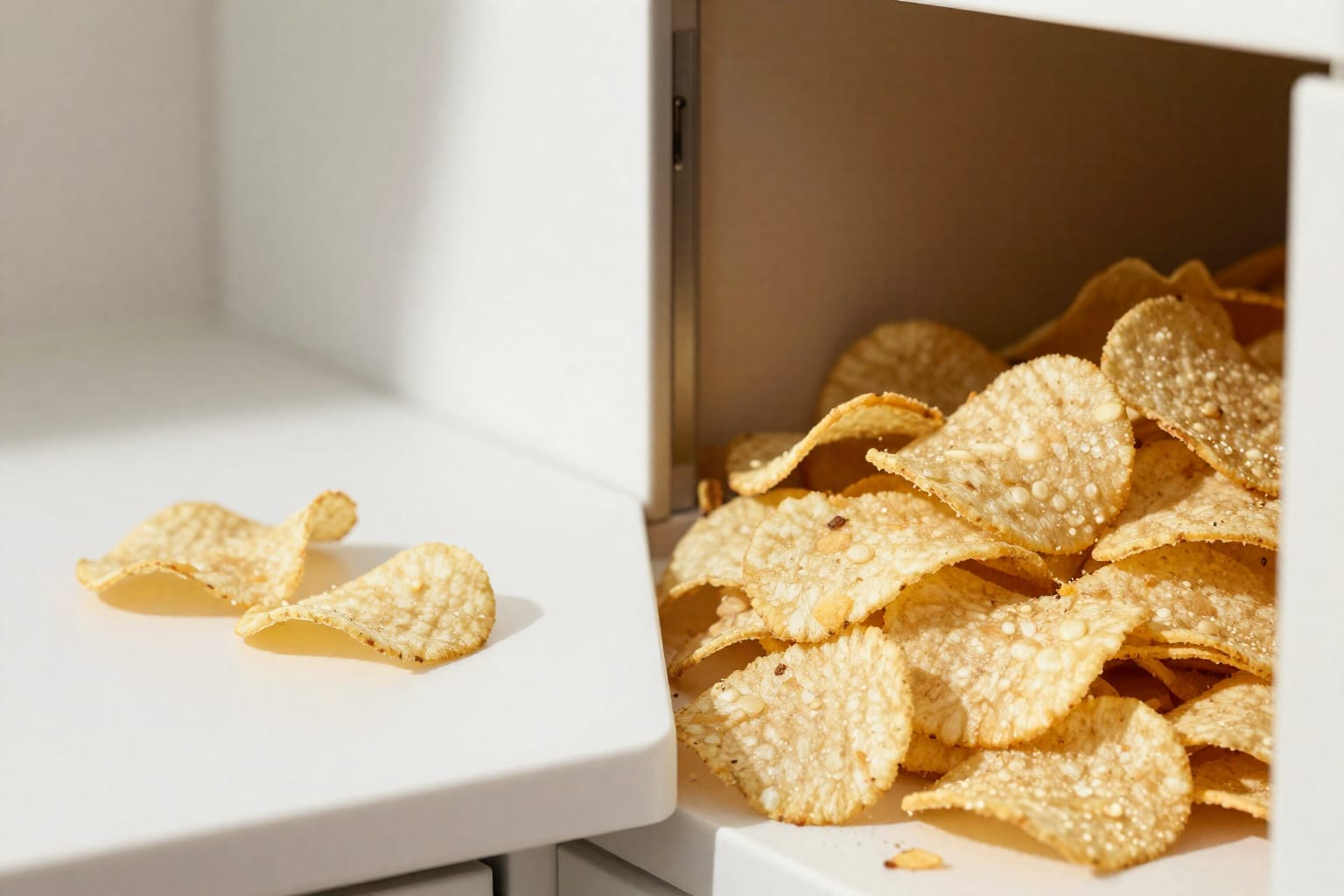
I spent three years of my twenties convinced I had a broken willpower gene. Every Monday I would draw a perfect meal plan on a sticky note. Every Tuesday by 4 p.m. I was elbow-deep in a bag of sour-cream-and-onion chips, staring at the empty bag like it had appeared by magic. The shame spiral was predictable: I wasn't trying hard enough. I needed more discipline. More grit.
Then one afternoon I moved apartments and, without thinking, put the chip bag in a high cabinet behind the blender. For two weeks I forgot I owned chips. That's when it hit me: I hadn't gotten stronger. I had just gotten smarter about where things lived. The science backs this up: your physical and social environment drives roughly 90% of your eating decisions — and willpower is the backup generator, not the main grid.
The Willpower Myth: Why We Keep Losing the Battle
The first time I read Brian Wansink's research from the Cornell Food and Brand Lab, I felt a weird mix of relief and annoyance. Relief because here was a scientist saying, It's not you, it's the bowl. Annoyance because I had spent years blaming myself. Wansink's famous studies showed that people who were given a bottomless soup bowl (it refilled via a hidden tube) ate 73% more soup than those with a normal bowl — and didn't feel any fuller. They also didn't report enjoying the soup more. They just kept eating because the bowl never emptied.
That's not a willpower failure. That's an environment design failure. Your brain is wired to respond to external cues — a visible cookie jar, a giant plate, the smell of popcorn in a movie theater — long before your rational prefrontal cortex gets a vote. Willpower is a finite resource that depletes across the day. By 8 p.m., after a day of decisions, your environment is running the show. The real question isn't "Why can't I resist?" It's "Why do I keep putting the thing I want to resist right in front of my face?"
When I finally stopped asking myself to be stronger and started rearranging my kitchen instead, the weight didn't just come off — it stayed off. Because I wasn't fighting myself anymore. I was working with the system my brain already had.
How Your Physical Space Shapes Every Bite
Let me take you inside my kitchen the way it looked before I knew better. The fruit bowl sat on the far counter behind a coffee maker. The granola bars were in a drawer you had to open with two hands. The cookies sat in a clear glass jar at eye level on the counter. Every time I walked past that jar, I saw cookies. I didn't even have to decide to eat them; my hand just reached. That's the cue-routine-reward loop running on autopilot.
Here's what I changed, and what the research says works:
- Plate size. I swapped my 12-inch dinner plates for 9-inch salad plates. Studies that Wansink and others have replicated show that people serve themselves 20–30% less food on a smaller plate — and don't notice the difference in satisfaction. I didn't either. The plate still looked full.
- Food visibility. In a 2020 meta-analysis published in the American Journal of Clinical Nutrition, researchers found that placing healthy foods at eye level in the fridge increased their selection by 31%. I moved my pre-cut veggies, yogurt, and hummus to the front of the middle shelf. The leftover cake went to the back of the bottom shelf, behind a bag of frozen broccoli.
- Snack placement. I put the chip bag in the pantry, on a high shelf, inside an opaque bin. The almonds went into a clear jar on the counter. The result? I ate almonds three times a week without thinking. I ate chips maybe once a month, and only when I deliberately decided to.
- Counter space. I cleared my counters of everything except the fruit bowl and a knife. No toaster, no cookie jar, no bread basket. A clean counter reduces the number of food cues your brain registers per minute. Less cue, less automatic eating.
The key insight here is that these changes don't require willpower. They require a one-time effort. You move the bowl once. You buy the smaller plates once. After that, the environment does the work for you, 24 hours a day, whether you're paying attention or not.
The Social Environment: Who You Eat With Matters More Than What You Order
I once spent a weekend at a friend's cabin where the unspoken rule was "eat whatever is in front of you, and there is always something in front of you." By Sunday night I had consumed approximately three times my normal calorie intake without a single conscious decision. I wasn't hungry. I just kept eating because everyone else was eating, and the platter kept getting refilled.
Social norms around food are so powerful that they can override your personal intentions within minutes. A 2018 review in Appetite found that people consistently eat more when dining with others than when eating alone — and the effect is stronger the more people are at the table. Your eating rate synchronizes with the group. You take bites when they take bites. You keep eating when they keep eating. You order dessert when they order dessert.
But here's the counterintuitive part: you can flip this to your advantage. When I started eating lunch with a colleague who always ordered a salad and stopped when she was full, I started doing the same. I didn't decide to change; I just mirrored her. That's the power of social environment working for you instead of against you.
Practical moves I made:
- Order first. When I go out with friends now, I order first. That sets the norm for the table. If I order a moderate portion, others are more likely to do the same.
- Choose your table. I started seeking out dining companions who eat slowly and stop when they're satisfied, not stuffed. It's not about judgment — it's about environment design.
- Create personal zones at home. I live with a partner who eats differently. Instead of fighting over the pantry, I claimed one shelf in the fridge and one drawer in the pantry for my food. He doesn't touch it. I don't touch his. The constant visual exposure to his snacks? Gone.
Rewiring Your Environment for Lasting Change Without Willpower
Here is the original take that most diet advice gets wrong: the goal isn't to make yourself stronger. The goal is to make the wrong choice invisible and the right choice effortless. This is the principle of friction — increasing friction for bad habits, decreasing friction for good ones.
One weekend, I did a full kitchen audit. I spent two hours moving things around. That's it. Two hours of work that has saved me thousands of mindless calories over the subsequent years. Here's the exact checklist I used, which you can copy:
- Move junk food out of sight. High shelf, opaque container, back of the pantry. Out of sight is out of mind — literally. Your brain stops registering the cue.
- Put healthy food at eye level. Front of the fridge, middle shelf. Countertop fruit bowl. Clear jars.
- Downsize your dinnerware. 9-inch plates, 8-ounce glasses, small bowls for snacks.
- Clear your counters. Nothing but a fruit bowl and a knife. No food packages, no baskets, no jars of candy.
- Pre-portion snacks. Buy individual bags, or portion them into small containers as soon as you get home from the store. This adds friction to overeating.
- Set a default. If you always eat a cookie after dinner, replace the default. Put a bowl of berries on the counter where the cookie jar used to be. The brain will reach for the new default after about two weeks.
The National Institutes of Health's behavioral weight management guidelines emphasize exactly this: environmental restructuring is a core strategy for long-term weight control, recommended above willpower-based approaches. It works because it's automatic. You don't have to remember to be strong. You just have to live in a space that makes the healthy choice the easy choice.
One final, share-worthy insight: the single most effective change I ever made was buying a smaller fork. No joke. I switched from a standard dinner fork to a salad fork. I ate slower. I took smaller bites. I finished my meal at the same time as everyone else, but I had eaten about 15% less. That one swap cost me three dollars and has paid for itself a hundred times over.
Your environment is not your enemy. It's your co-pilot. You just have to tell it where to go — once, on a weekend afternoon, with a screwdriver and a clear intention. After that, you can stop blaming your willpower and start trusting your space.

Katherine George
Katherine covers active living, fitness, food and practical habits that help readers feel their best.