
7 Ways to Cut Calories at Parties Without Anyone Noticing

Last Thanksgiving, I watched my cousin demolish three plates of stuffing and two slices of pie, then lean back and announce she was “watching her figure.” She wasn't lying — she'd simply learned how to reduce calorie intake at social events gracefully, and nobody at the table had a clue. The secret wasn't willpower. It was a handful of invisible moves that looked entirely natural. That night she told me her rules, and the next party I tried them myself: I walked out having eaten roughly 400 fewer calories than I normally would, and the host still thanked me for “really digging in.” Here are the seven moves that actually work.
The Real Social Trap: Why Parties Derail Your Diet (and How to Stay in Control)
Parties are designed to lower your guard. The food is free, the plates are tiny, and someone is always saying “you have to try this.” I used to arrive with a plan and leave with a food hangover, frustrated that I’d undone a week of careful eating in three hours. The research backs up the struggle: a Journal of the Academy of Nutrition and Dietetics study found that people eat up to 44% more when dining with friends than when eating alone — and at a party, everyone is a friend. The social eating challenge isn't just about hunger; it's about mirroring, politeness, and distraction.
But here’s the counter-intuitive part: the most effective calorie-cutting moves are the ones nobody can see. If you announce you're on a diet, two things happen. First, people start watching your plate, which makes you self-conscious. Second, someone inevitably becomes the food-pusher, insisting you “just have a bite.” The better path is to become a calorie ninja — adjusting your own behavior so subtly that the only person who knows is you. The strategies below aren't about deprivation. They're about gentle, invisible shifts that let you enjoy the party fully while sidestepping the worst of the calorie load.
1. Master the 'Glass Swap' (Your Secret Weapon at the Bar)
Here’s the move that changed everything for me. Walk up to the bar and order a vodka soda with a lime wedge. Drink half of it. Then, the next time you go back, ask for a plain soda water with lime — in the exact same type of glass. No one can tell the difference. I’ve done this at three weddings and a Super Bowl party, and the only comment I’ve ever gotten is “that looks refreshing.” Meanwhile, each swap saves you roughly 100 calories. If you alternate real drinks with ghost drinks over a four-hour event, you can cut 300–400 calories from alcohol alone without a single person asking if you're “being good.”
For low calorie party drinks beyond the vodka soda, I lean on tequila with fresh grapefruit juice and soda, or a dry white wine spritzer. The trick isn't the specific drink — it's the glassware. As long as your beverage matches what everyone else is holding, you're invisible. And a bonus: the extra hydration from the ghost drinks means you'll feel better the next morning. That's a calorie-cutting drinking tip that also functions as a hangover-prevention strategy, which feels less like a diet and more like wisdom.
2. The Plate Strategy: How to Look Full While Eating Less
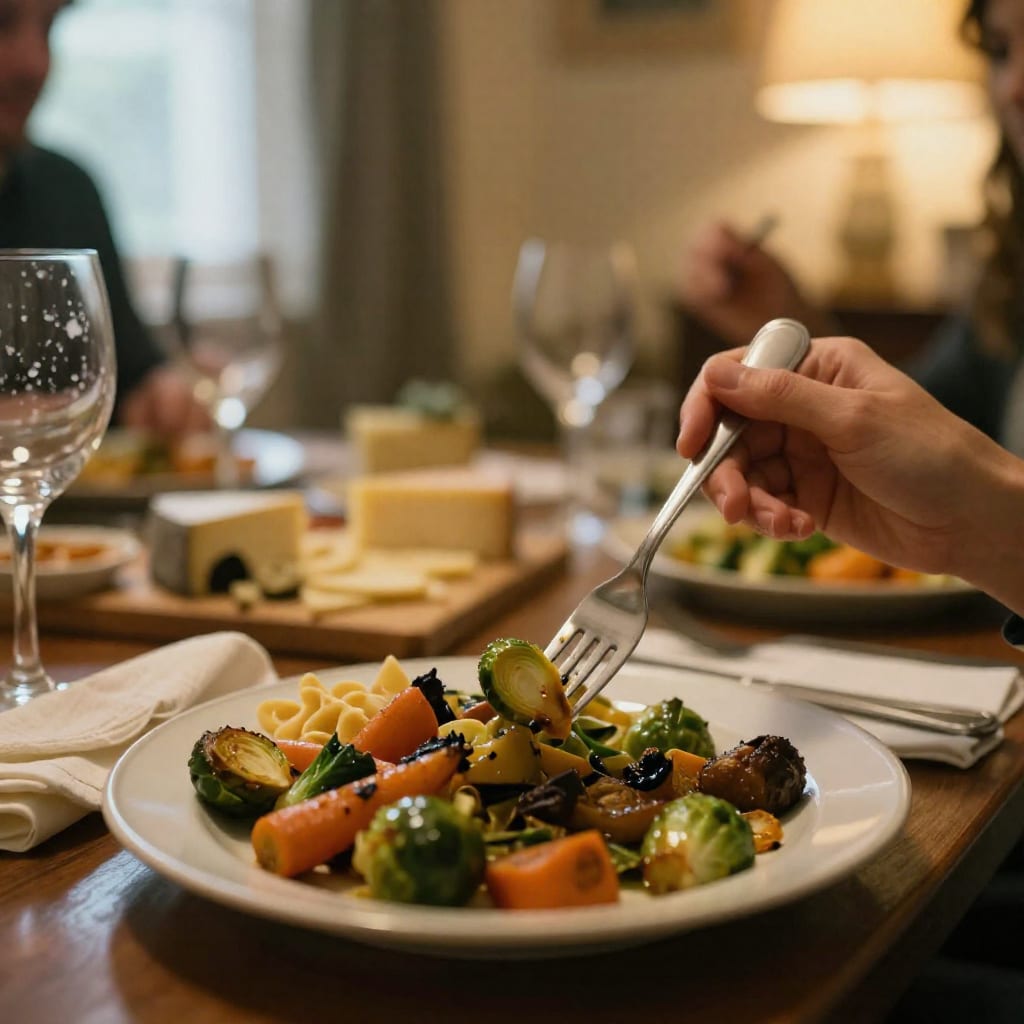
I learned this from a friend who is a food stylist. She plates food for photos, not for eating — and she applies the same visual logic at buffets. The trick is plate composition, not starvation. Fill half your plate with vegetables and lean proteins first, then use the remaining space for a small scoop of the indulgent carb and a single spoonful of the creamy casserole. The plate looks abundant. To anyone glancing over, you’ve got a full, festive meal. But the calorie density is drastically lower.
Then add the pacing layer. I put my fork down between every bite, and I aim to be the slowest eater at the table. This does two things. First, it gives your stomach's stretch receptors time to signal fullness — a process that takes about 20 minutes. Second, when the host comes by offering seconds, you can point to a still-half-full plate and say “I'm working on it, this is so good.” You’ve eaten less, but you look like you’re thoroughly enjoying yourself. That's the core of portion control at parties: make the visual story match the social expectation, not the calorie count.
3. 'I’m Saving Room' – The Polite Reframe That Works Every Time
I used to dread the moment when someone would push a plate of brownies toward me and say, “You’ve barely eaten anything!” My old response was a sheepish “Oh, I’m trying to be healthy,” which instantly made me the party downer. Then a friend taught me the “saving room” script, and it’s been a social lifesaver. When offered food you don’t want, you smile and say, “I’m saving room — I heard the [insert later dish or dessert here] is incredible.” This reframes your refusal as anticipation, not restriction. You’re not on a diet; you’re a discerning guest with a strategy.
I’ve used this at office potlucks, baby showers, and a barbecue where the host kept bringing out more platters. The key is tone: light, a little conspiratorial, and always paired with a genuine compliment about the food you’re skipping. “Those brownies look perfect — I’m saving room for the pie, but save me one for later?” You’ve made the host feel good, you haven't lied, and you’ve bought yourself an out that nobody will question. This is how to refuse food politely at parties without ever saying the word “diet.”
As Dr. Eric Berg explains in his video on flat stomach mistakes, focusing on the wrong things — like obsessively cutting fat while ignoring hidden sugars and stress hormones — can sabotage progress. At a party, that translates to: it's not just the cake, it's the cumulative effect of grazing while your cortisol spikes from social anxiety. The “saving room” script does double duty here: it reduces the calorie load and lowers the social stress that can drive belly fat storage.
4. The 10-Minute Rule: A Tiny Pause That Cuts Hundreds of Calories
This is the most boring-sounding trick on the list, and also the most effective. After you finish your first plate of food, set a mental timer for 10 minutes before you even look at the buffet again. I started doing this after reading about the satiety cascade — the biological lag between your stomach filling and your brain registering fullness. At a party, that lag is your best friend. In those 10 minutes, I’ll strike up a conversation, refill my ghost drink, or step outside for air. Nine times out of ten, the urge for a second plate evaporates.
I tracked this once at a dinner party: my first plate came to about 450 calories. Without the 10-minute rule, I would have gone back for another 300-calorie round of scalloped potatoes and bread. With the pause, I realized I was actually satisfied, not hungry. I’d just been eating on autopilot because the food was there. That’s an invisible 300-calorie save, and it’s the most graceful form of mindful eating at parties because you’re not staring at a timer on your phone — you’re just being a slightly slower, more deliberate version of yourself.
5. The 'Two-Bite' Solution for Desserts and Finger Foods
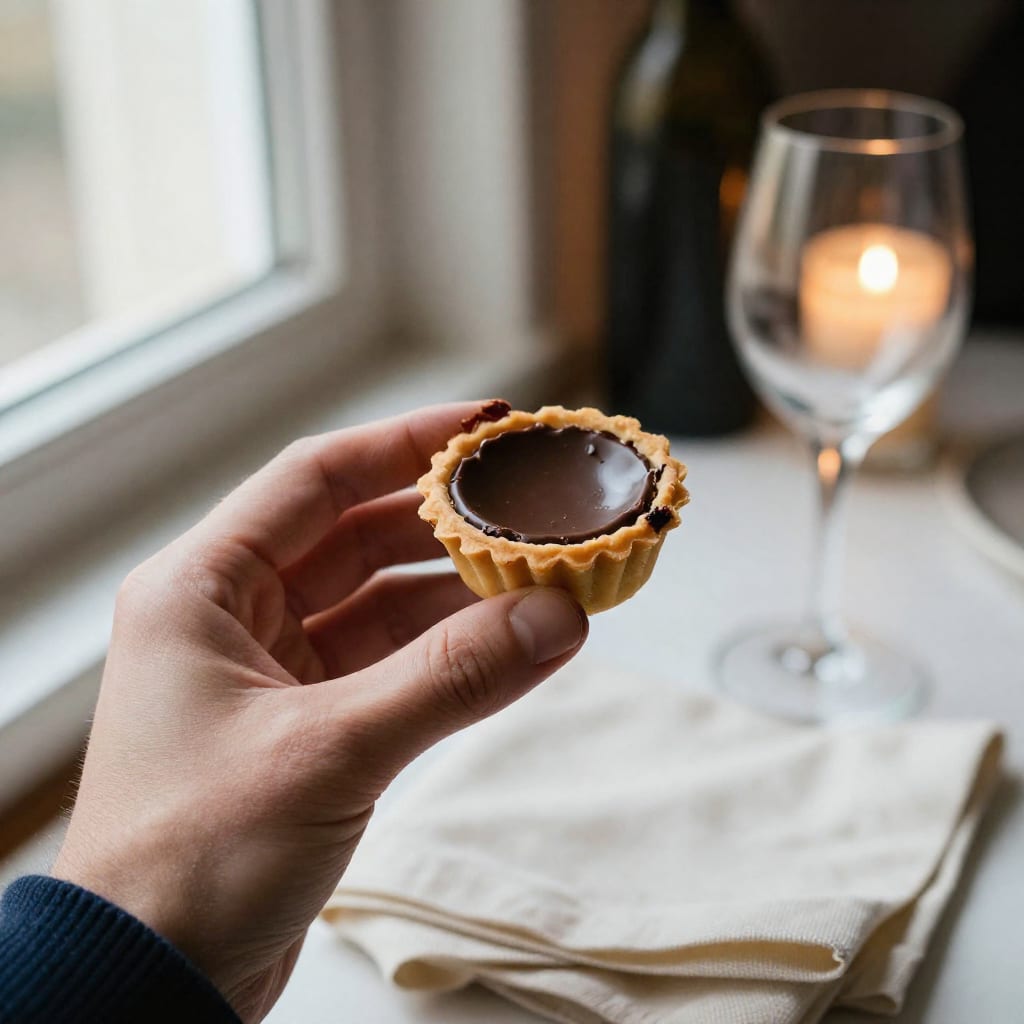
I have never met a dessert table I didn’t want to demolish. Telling myself “no dessert” at a party is a recipe for resentment and eventual binge-eating in the car. So I borrowed a rule from a pastry chef I know: the first two bites of any dessert contain 90% of the pleasure. After that, you’re just chasing the memory of the first bite. Now, when I hit the dessert spread, I take a single cookie or a sliver of cake, eat two deliberate, savoring bites, and then set the rest aside or hand it to my partner. I’ve had the experience. I’ve tasted the thing. And I’ve walked away having consumed maybe 80 calories instead of 350.
This works for appetizers too. The “two-bite” solution is a portion control at parties hack disguised as sophistication. You’re not the person who skips the passed hors d'oeuvres and looks judgmental; you’re the person who tries one, compliments it, and moves on. At a recent gallery opening, I ate two bites of a bacon-wrapped date, two bites of a mini quiche, and one bite of a chocolate truffle. Total: maybe 150 calories. The woman next to me ate five full-sized dates while we talked, and I guarantee she didn't notice I’d stopped. This is how to eat less at a party without being rude — you sample, you enjoy, you stop.
6. Dress for Success: How Your Outfit Can Help You Eat Less
This one sounds gimmicky until you try it. I wore a fitted, high-waisted skirt to a cocktail party last spring — not Spanx-level tight, but structured enough that I felt a gentle compression around my midsection when I sat down. That physical cue became an automatic brake. Every time I reached for another crostini, my body sent a small signal: you’re full, you’re done. I didn't have to think about it consciously; my clothing did the work for me. By the end of the night, I’d eaten about half of what I normally would, and I’d spent more time dancing.
There’s a psychological layer too. When I wear something I feel sharp in, I’m more aware of my posture and my presence. That awareness extends to how I eat. I’m not slouching over a plate; I’m standing tall, holding a drink, and engaging in conversation. The outfit becomes a social eating strategy without a single word spoken. The caveat: don’t wear anything that hurts or restricts breathing — the goal is a gentle reminder, not a corset. But a well-tailored jacket or a dress with a defined waist can be a surprisingly effective party diet tip.
7. The 'Busy Hands' Move: Engage Without Eating
My mother is a fidgeter, and at parties, she’s never without a cocktail napkin twisted around her fingers. She’s also the only person I know who can stand next to a cheese board for an hour and eat exactly three almonds. I finally asked her about it, and she said, “If my hands are busy, my mouth stays shut.” It’s so simple it’s almost stupid, but it works. The “busy hands” move is a behavioral hack that prevents mindless snacking. Hold a drink (even a ghost drink), a napkin, a small clutch, your phone — anything that occupies one hand makes it significantly harder to grab food on impulse.
I’ve adapted this for networking events, where the appetizer table is a nervous-energy magnet. I hold a sparkling water in my dominant hand and a small notebook in the other. I’m not taking notes; I’m just giving my hands a job. The result: I eat almost nothing until I’m genuinely hungry, and I have better conversations because I’m not constantly reaching for food. This is an invisible diet trick at parties that also makes you look engaged and professional — a double win that requires zero willpower in the moment.
The Green Door Life video on caloric deficits after 40 highlights a crucial point: hormonal shifts can make you more stress-sensitive and insulin-resistant, meaning the same old diet tricks might stop working. If you’ve been cutting calories but not seeing results, the “busy hands” move and the 10-minute rule become even more valuable — they reduce the stress of social eating and help regulate the hormonal cascade that can stall fat loss.
Putting It All Together: Your Invisible Party Playbook
None of these moves requires a personality transplant. You don’t have to become the person who brings their own Tupperware of celery sticks or lectures people about sugar. You just need a small, repeatable playbook. Here’s the condensed version worth snapping a photo of before your next event:
- At the bar: alternate real drinks with ghost drinks in matching glassware.
- At the buffet: fill half the plate with vegetables and lean protein, then pace yourself to be the slowest eater.
- When pressured: use “I’m saving room for [later dish]” with a genuine smile.
- After plate one: wait 10 minutes before even glancing at seconds.
- At the dessert table: take two savoring bites, then set it down and walk away.
- In your closet: choose a fitted but comfortable outfit that gives gentle abdominal feedback.
- With your hands: keep them occupied with a drink, napkin, or phone to block mindless grazing.
The cumulative effect is significant. On a typical party night, I used to consume 800–1,000 calories before I even noticed. Now, using these strategies, I land closer to 400–500 — and I enjoy the party more because I’m not sluggish, bloated, or mentally beating myself up. That’s the real goal: not to suffer through social events, but to learn how to reduce calorie intake at social events gracefully so you can be present, have fun, and wake up feeling like you still own your choices.

Katherine George
Katherine covers active living, fitness, food and practical habits that help readers feel their best.