
The 20-Min Lower Body Workout That Builds Stronger Legs Fast
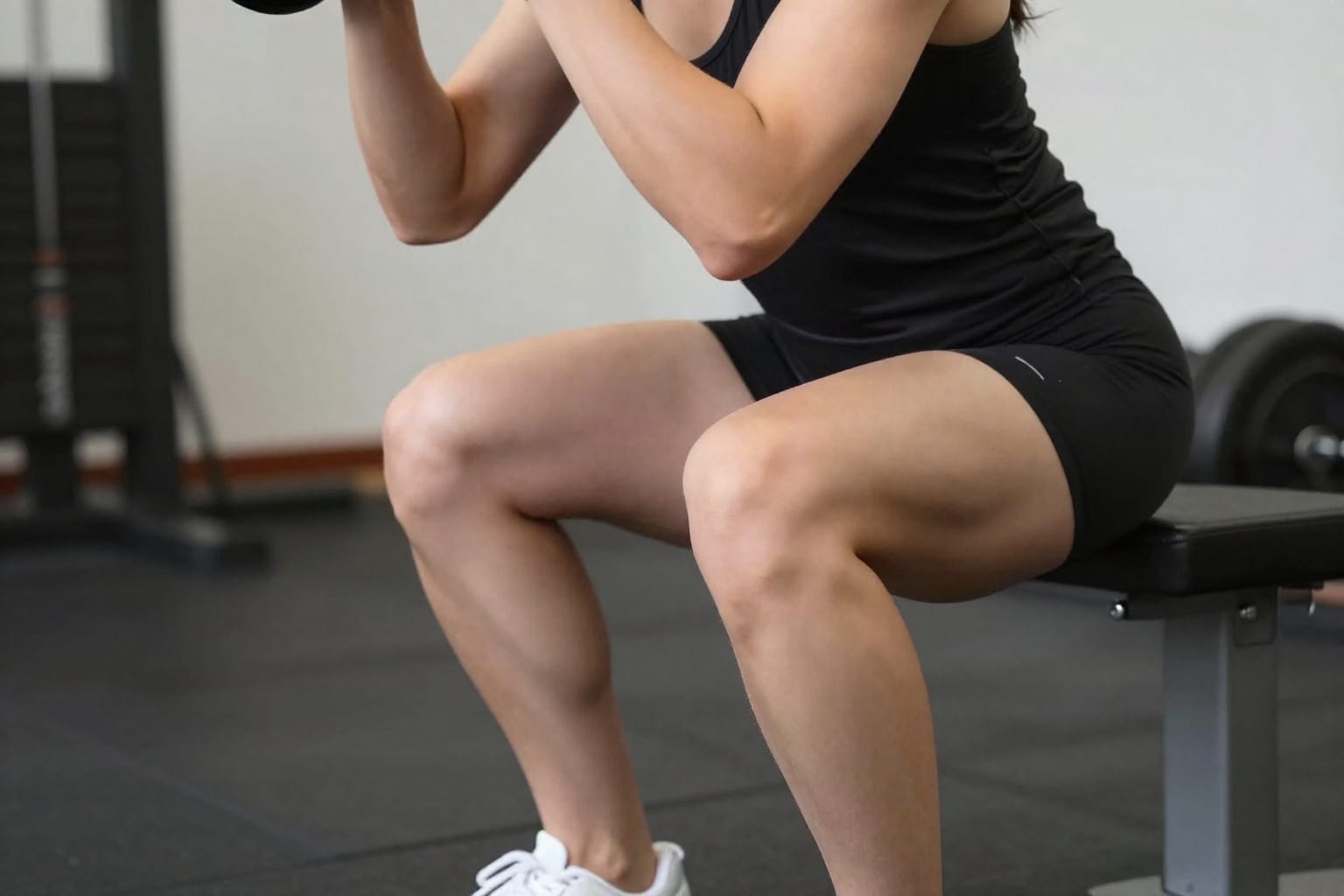
I used to think that a proper leg day required at least an hour of grinding through heavy squats, lunges, and leg presses until my quads felt like jelly. But last year, after my schedule got packed with work deadlines and family commitments, I had to prove myself wrong. I set a timer for 20 minutes, grabbed a pair of dumbbells I could actually control, and ran a workout that left my legs shaking—and stronger than they'd been in months. Here's the truth: a focused 20-minute lower body workout can build stronger legs fast, as long as you choose the right moves and push hard enough.
Why 20 Minutes Is All You Need for Stronger Legs
The biggest barrier to consistent leg training, for most people I know, isn't lack of motivation—it's lack of time. But here's the counterintuitive insight: shorter workouts often deliver better strength gains than long, meandering sessions. Why? Because when you know you only have 20 minutes, you stop messing around. You don't rest for two minutes between sets. You don't scroll your phone. You get in, you work, you get out. And your muscles respond to that intensity.
From a physiology standpoint, building leg strength hinges on two things: mechanical tension and metabolic stress. Both can be achieved in under 20 minutes with compound exercises—moves that engage multiple joints and muscle groups at once. Think squats, lunges, deadlifts, and glute bridges. These aren't just efficient; they're the backbone of any lower body workout for building stronger legs. In my own experience, after three weeks of this exact 20-minute routine, I could squat 15 pounds more with better depth. No marathon sessions required.
What about the argument that you need at least 45 minutes to stimulate growth? That's outdated thinking. Research from the National Strength and Conditioning Association supports that even short, high-intensity resistance training sessions can trigger muscle protein synthesis and strength adaptations—provided you're using enough load and proper form. The key is progressive overload, not clock time. So if you're sitting there thinking, "I can't fit leg day into my day," this routine is my answer: 20 minutes, four moves, and a timer that doesn't negotiate.
The Warm-Up That Preps Your Legs for Power
Before I jump into the main workout, I've learned the hard way that skipping the warm-up is a fast track to tweaking a hamstring or feeling that grinding sensation in your knees. A good warm-up doesn't need to take ten minutes—mine takes exactly four. It's designed to wake up your glutes (which tend to fall asleep from sitting all day), open your hips, and get blood flowing to your quads and hamstrings.
Here's the warm-up I do before every 20-minute leg session:
- Bodyweight squats (10 reps): Focus on pushing your knees out and sitting back like you're lowering into a chair. No weight yet—just groove the pattern.
- Walking lunges (8 reps per leg): Take a big step forward, lower your back knee toward the ground, and drive up through the front heel. This activates your quads and glutes dynamically.
- Leg swings (10 per leg, front-to-back and side-to-side): Hold onto a wall or chair and swing your leg like a pendulum. This loosens your hip flexors and hamstrings.
- Glute bridges (12 reps): Lie on your back, knees bent, feet flat. Drive your hips up, squeezing your glutes at the top. This is the single best move to wake up your posterior chain before heavy work.
The entire warm-up takes under four minutes. I do it without rushing, but I also don't drag it out. If I'm pressed for time, I'll cut the leg swings to six each side. The goal is to feel warm, not exhausted. When my legs feel "ready," I know it's time to grab the weights.
The 20-Min Workout: 4 Moves for Full Leg Strength
Now for the main event. This workout is built on four compound exercises that hit every major muscle in your lower body: quads, hamstrings, glutes, and calves (indirectly through stabilization). You'll do each move for a prescribed number of sets and reps, resting only 45 seconds between exercises. I set a timer on my phone and go.
Here's the exact routine I follow. I'll include the weights I use (adjust based on your strength level—start lighter than you think):
Exercise 1: Goblet Squats (3 sets of 10 reps)
Hold a dumbbell vertically at your chest, elbows pointing down. Squat down as if sitting back into a chair, keeping your chest up and knees tracking over your toes. Drive through your heels to stand. I use a 35-pound dumbbell for this. If you don't have a dumbbell, a kettlebell or a heavy backpack works. Form tip: If your heels lift off the ground, you're probably going too deep or your ankles are tight—try placing a small wedge under your heels or squatting to a box.
Exercise 2: Walking Lunges (3 sets of 8 reps per leg)
Hold a dumbbell in each hand at your sides. Step forward with your right leg, lowering your left knee toward the ground until both knees are at 90 degrees. Push off your front foot to step forward into the next lunge. I use 20-pound dumbbells for these. Form tip: Keep your torso upright—don't lean forward. If you feel it in your lower back, you're probably arching. Tighten your core.
Exercise 3: Romanian Deadlifts (3 sets of 10 reps)
Hold a dumbbell in each hand in front of your thighs. Hinge at your hips, pushing your butt back while keeping your back flat. Lower the dumbbells down your shins until you feel a stretch in your hamstrings. Squeeze your glutes to return to standing. I use 30-pound dumbbells. Form tip: This is not a squat—your knees should stay slightly bent but not move much. If your lower back hurts, you're rounding your spine. Keep your chest proud.
Exercise 4: Glute Bridges (3 sets of 12 reps)
Lie on your back, knees bent, feet flat on the floor hip-width apart. Place a dumbbell across your hips (hold it in place with your hands). Drive your hips up, squeezing your glutes at the top for a one-second hold. Lower slowly. I use a 40-pound dumbbell for this. Form tip: Don't let your lower back take over—think about pushing through your heels. If you feel it in your hamstrings more than your glutes, scoot your feet closer to your butt.
How to structure the 20 minutes: Perform all four exercises back-to-back with 45 seconds rest between moves. That's one round. Rest 90 seconds after finishing all four, then repeat the entire circuit two more times. Total time: about 19 minutes. I've done this in my living room, in a hotel gym, and in my garage. It works everywhere.
Here's a concrete case: My friend Sarah, a busy mom of two, started doing this workout three times a week with just bodyweight. After four weeks, she could do full push-ups (she couldn't before) because her core and leg strength had improved. She added 10-pound dumbbells in week five and noticed her jeans fit differently around her thighs. She didn't spend hours in a gym—she just committed to 20 minutes.
How to Progress and Keep Building Leg Strength
The biggest mistake I see people make with any lower body workout for building stronger legs is doing the same weight and reps forever. Your body adapts fast. If you want to keep getting stronger, you need to apply progressive overload—making the work harder over time. Here's how I do it without overcomplicating things:
- Add weight: Increase the dumbbell weight by 2–5 pounds every two weeks, as long as you can maintain good form for all reps.
- Increase reps: If you can't add weight yet, add one or two reps per set. Go from 10 to 12 reps before bumping the load.
- Shorten rest: Drop your rest periods from 45 seconds to 30 seconds between moves. This increases metabolic stress and endurance.
- Add a tempo: Slow down the lowering phase of each exercise—take three seconds to lower the weight. This increases time under tension.
For beginners, bodyweight is fine. For intermediate lifters, aim for dumbbells that make the last two reps of each set feel hard but not impossible. For advanced folks, you can swap goblet squats for barbell back squats or add a fifth move like step-ups. The routine is modular—but don't add volume without reducing intensity somewhere.
Common Mistakes That Sabotage Leg Day Results
I've made every mistake in the book, and I've watched others make them too. Here are the three that kill progress faster than anything else:
Mistake 1: Letting your knees cave inward during squats and lunges. This is a stability issue. It puts unnecessary stress on your ACL and reduces glute activation. Fix it by consciously pushing your knees out over your second toe. Practice with a resistance band just above your knees to reinforce the pattern.
Mistake 2: Using too much weight too soon. I once tried to squat 50 pounds in this workout and ended up with a strained lower back that sidelined me for two weeks. Strength is built gradually. Lighter weight with perfect form will outpace heavy weight with sloppy technique every time.
Mistake 3: Not resting enough between sessions. Leg muscles are large and take longer to recover. Doing this workout every day won't make you stronger—it'll make you overtrained. Stick to 2–3 times per week, with at least 48 hours between sessions. On your off days, do some light walking or stretching.
If you're dealing with knee pain, check your form first. Keep your knees tracking over your toes, avoid letting them shoot past your toes excessively, and try a shallower squat depth. If the pain persists, swap lunges for step-ups onto a low box—it's gentler on the knees while still working your quads and glutes.
Worth bookmarking before your next workout: this 20-minute routine is simple enough to remember but tough enough to deliver results. The next time you're short on time, don't skip leg day—just shrink it. Your legs will thank you.
Practical takeaway: Commit to this 20-minute lower body workout three times a week for the next four weeks. Use a timer, focus on form, and apply progressive overload by adding weight or reps every two weeks. Stronger legs don't require hours—they require consistency and intensity. That's it.

Clarissa Vanner
Clarissa writes practical health and lifestyle stories with a warm, useful editorial voice.