
Whole Grains vs Refined Grains: 5 Science-Backed Reasons to Switch
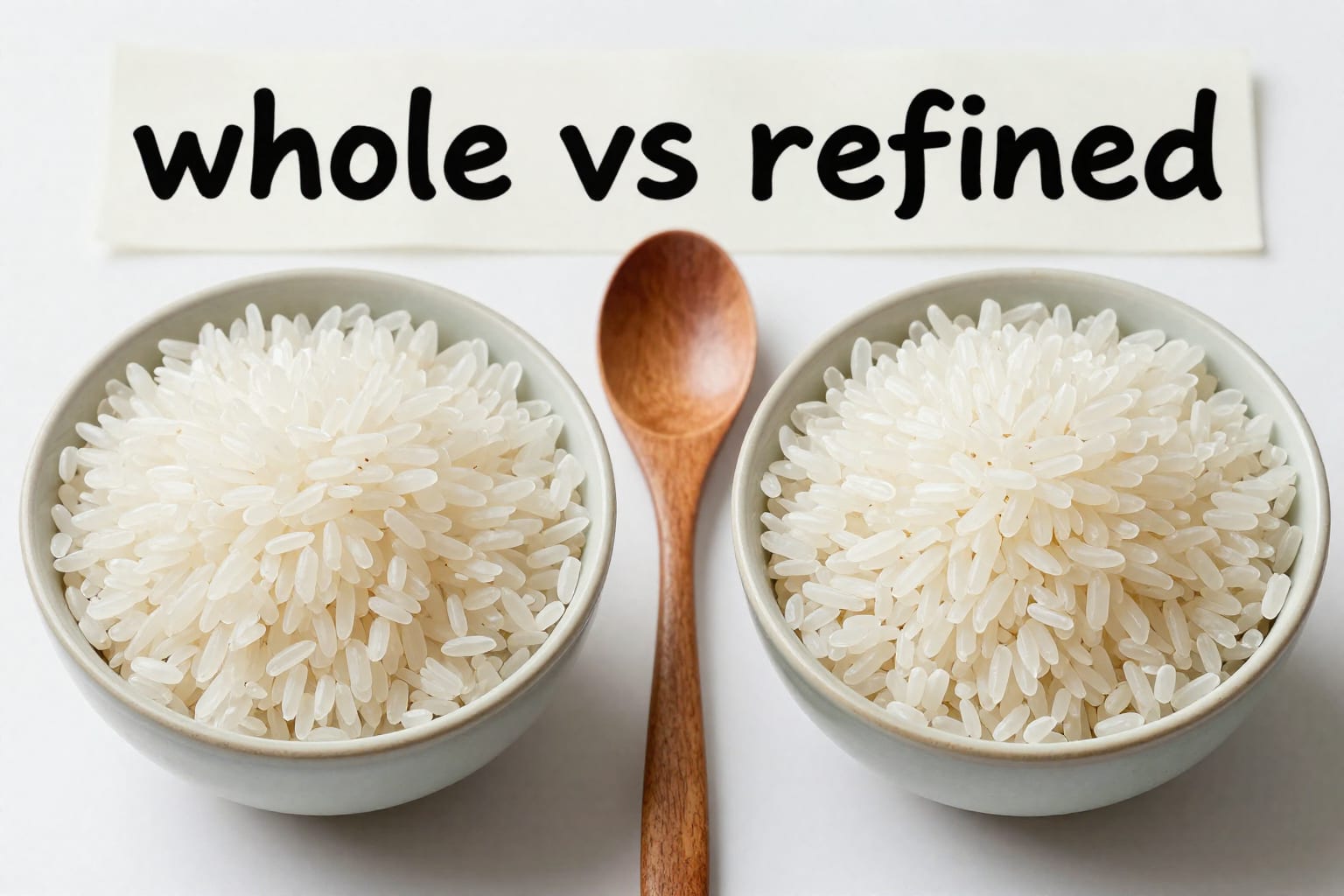
I stood in my kitchen last Tuesday staring at two bags of rice. One was a familiar, cheap white jasmine that had been my pantry staple for years. The other was a bag of brown basmati I’d bought on a whim. I’d heard the whole grains vs refined grains debate for years, but that morning, after a breakfast of white toast and jam had left me foggy and hungry by 10 a.m. for the third day in a row, I finally decided to test it. I cooked both side by side, plain, no sauce. The white rice was soft and disappeared fast. The brown rice had a nutty chew that made me slow down. That single swap didn’t fix my life, but it changed my energy enough that I started digging into the science. Here’s what I found—five solid reasons that made switching feel less like a diet and more like a smart bet.
The Simple Swap That Changed My Energy (And My Pantry)
That morning with the rice was the moment my pantry started shifting. Over the next week, I swapped my go-to sandwich bread for a dense loaf with visible seeds and swapped my quick oatmeal packets for steel-cut oats I had to actually cook. The first few days felt strange—I missed the soft, airy texture of white bread. But by day five, I noticed something: I wasn’t reaching for a snack at 11 a.m. My afternoon slump was less brutal. The change wasn’t dramatic, but it was real. And when I looked into the research, I realized those small tweaks were backed by decades of nutrition science. The whole grains vs refined grains question isn’t about being perfect; it’s about the cumulative effect of one better choice at a time.
What Actually Are Whole Grains and Refined Grains?
To understand the difference, you need to know what a grain kernel looks like. A whole grain—like brown rice, quinoa, oats, or whole wheat—keeps all three parts intact: the bran (the outer layer rich in fiber and B vitamins), the germ (the core packed with healthy fats, vitamin E, and minerals like magnesium), and the endosperm (the starchy middle that provides energy). When a grain is refined, the bran and germ are stripped away, leaving only the endosperm. That process extends shelf life and creates a softer texture, but it also removes roughly 25 percent of the grain’s protein and at least 17 key nutrients. Enriched grains add back some B vitamins and iron, but they don’t restore the fiber, magnesium, or antioxidants lost. So when you eat white rice, white bread, or most pastas, you’re getting a fraction of what the original grain offered.
Reason #1: Fiber – The Gut Health Game Changer
Fiber is the most obvious difference between whole and refined grains, and it’s a big one. A cup of cooked brown rice has about 3.5 grams of fiber; a cup of white rice has less than 1 gram. That might not sound huge, but fiber does three things that matter daily: it slows digestion, keeps you full longer, and feeds the good bacteria in your gut. After I switched to whole grains, I noticed my digestion felt steadier—fewer bloated afternoons and more predictable energy. The science backs this up: a 2019 review in The Lancet found that higher fiber intake is linked to lower risk of heart disease, stroke, type 2 diabetes, and colorectal cancer. Refined grains, with their stripped fiber, don’t provide that protective effect. The practical takeaway? Swapping one serving of refined grains for whole grains adds about 2–3 grams of fiber to your day. Over a week, that’s a real difference.
Reason #2: Nutrients That Disappear in Refining
When the bran and germ are removed, you lose more than fiber. Magnesium is a prime example—a mineral involved in over 300 biochemical reactions, including muscle function, blood pressure regulation, and sleep. One cup of cooked brown rice delivers about 80 milligrams of magnesium; white rice offers only about 20. Similarly, whole wheat bread has roughly three times the zinc and twice the vitamin E of refined white bread. I used to think “enriched” meant the nutrients were put back, but enriched flour typically adds only iron, thiamine, riboflavin, niacin, and folic acid. It doesn’t restore magnesium, selenium, or the natural antioxidants like lignans that help reduce inflammation. So when you choose whole grains, you’re getting a broader spectrum of nutrients that work together, not just a few synthetic replacements.
Reason #3: Blood Sugar Control – No More Spikes and Crashes
This is where I felt the shift most directly. White bread and sugary cereals send my blood sugar up fast, then drop it hard—leaving me shaky and hunting for another carb. Whole grains, thanks to their intact fiber and structure, have a lower glycemic index. That means glucose enters your bloodstream more slowly, giving you steady energy instead of a rollercoaster. A 2020 meta-analysis in BMJ found that replacing refined grains with whole grains was associated with a 29 percent lower risk of type 2 diabetes. The mechanism is simple: slower digestion means less insulin demand over time, which improves insulin sensitivity. For me, that translated into fewer cravings and better focus in the afternoon. It’s not about cutting carbs—it’s about choosing carbs that work with your biology, not against it.
Reason #4: Heart Health – The Proven Connection
The link between whole grains and heart health is one of the strongest in nutrition research. A 2016 study in Circulation analyzed data from over 100,000 people and found that those who ate the most whole grains had a 21 percent lower risk of heart disease. The fiber in whole grains helps lower LDL (bad) cholesterol, while the potassium and magnesium support healthy blood pressure. Refined grains, on the other hand, are often paired with added sugars and unhealthy fats in processed foods. I used to think a “whole grain” label on a box of crackers meant it was automatically heart-healthy, but I learned to check the ingredient list. If the first ingredient is refined flour, even if there’s a little whole wheat, it’s not the same as eating intact grains like oats, quinoa, or barley. The real benefit comes from grains that haven’t been pulverized and stripped.
Reason #5: Weight Management – Feeling Full Without Fighting
This reason is less about calories and more about satiety. When I eat a bowl of oatmeal made from whole oats, I’m satisfied for four hours. A bowl of sugary cereal made from refined grains leaves me hungry in two. The fiber and protein in whole grains trigger fullness signals that refined grains don’t. A 2017 study in Nutrients found that participants who replaced refined grains with whole grains ate about 100 fewer calories per day without trying. Over a month, that adds up. The key is not to trick yourself into thinking “whole grain” means unlimited portions—it’s still food with calories—but the natural fullness makes it easier to stop when you’re satisfied. I found that starting lunch with a side of quinoa instead of white rice meant I didn’t need that afternoon cookie. The swap didn’t feel like deprivation; it felt like I was on my own side.
How to Make the Switch Without Feeling Deprived
If you’re used to refined grains, going cold turkey can backfire. Here’s what worked for me: start with a single swap. Replace white rice with brown rice or quinoa two nights a week. Try 100 percent whole wheat pasta instead of white—and cook it al dente, not mushy, so it has more bite. For breakfast, switch to rolled oats or steel-cut oats; I add a pinch of salt and a handful of berries, and it feels like a treat, not a chore. Watch out for hidden refined grains in sauces, soups, and processed snacks—those white flour-based thickeners add up. And don’t assume a product labeled “multi-grain” or “whole grain” is always a good choice. Check the ingredient list: “whole wheat flour” or “whole grain corn” should be first. If it says “enriched flour,” it’s refined. One more thing: give your taste buds time. The first week, whole grains might taste earthy or dense. By week two, white bread starts tasting like air. Your palate adapts faster than you expect.
Practical Takeaway
Switching from refined to whole grains doesn’t require a complete kitchen overhaul. Start with one meal, one swap, and notice how you feel. The science is clear: whole grains offer more fiber, more nutrients, better blood sugar control, heart protection, and easier weight management. But the real win is the steady energy you can feel. That bag of brown rice in my pantry is now a permanent resident. It’s not about being perfect—it’s about making the next choice a little smarter.

Patty Weasler, RN
Patty is a registered nurse and health writer who reviews medical content for clarity and accuracy.