
7 Vitamins Almost Impossible to Get From Food Alone (2026 Update)
Last spring, I spent a full month logging every single bite I ate into a tracking app—not to count calories, but to see how close I actually came to hitting the daily targets for every vitamin. I eat a varied diet: eggs, leafy greens, lean meat, plenty of produce. When the results came back, I was low on three of the seven vitamins on this list. That was the first clue that even a conscientious eater can miss the mark. In 2026, with soil depletion, long supply chains, and the rise of plant-forward eating, the question what vitamins are hard to get from food alone yields a longer list than most people expect. Here are the seven that almost always require a strategic boost—whether through smarter food choices or targeted supplementation.
Why Some Vitamins Are Tricky to Source From Food Alone
You might assume a balanced diet covers everything. I used to think the same, until I realized that modern farming practices have stripped soil of key minerals—selenium and zinc, for instance—which means crops grown in those soils contain less of certain nutrients. Then there’s food processing: milling grains removes the germ and bran where many B vitamins live. And don’t forget food storage and cooking: produce loses vitamin C the longer it sits, and heat destroys folate. On top of that, many people follow restricted diets—vegan, low-dairy, or gluten-free—that cut out entire food groups rich in certain vitamins. The bottom line is that nutrient depletion in food is real, and it’s not just a fringe concern. A 2024 study in the Journal of Food Composition and Analysis found that the iron content in 36 common vegetables had dropped by an average of 15% compared to 50 years ago. So when you ask what vitamins are hard to get from food alone, the answer isn’t theoretical—it’s a practical problem you may already be living with.
1. Vitamin D: The Sunshine Vitamin in Short Supply
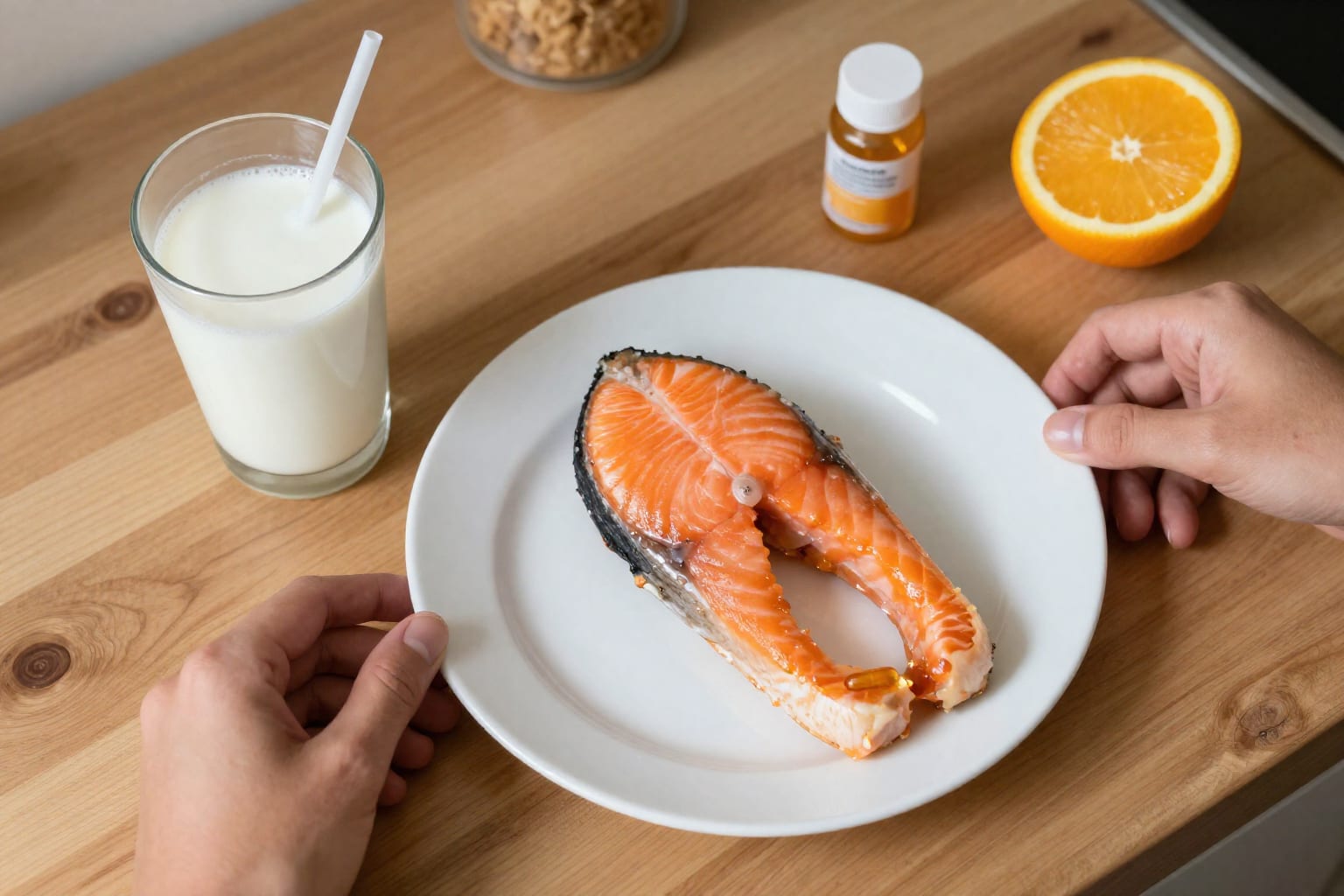
Vitamin D is the classic example of a nutrient that’s nearly impossible to get enough of from food alone. Only a handful of foods naturally contain it: fatty fish like salmon, mackerel, and sardines; cod liver oil; and egg yolks from pastured hens. Even fortified foods—milk, orange juice, breakfast cereals—typically add only 100–150 IU per serving. Compare that to the daily recommendation of 600–800 IU for most adults, and you’d need to drink four glasses of fortified milk and eat salmon every day just to hit the lower end. For someone living above the 37th parallel (roughly from San Francisco to Philadelphia), winter sun is too weak to trigger skin synthesis. When I lived in Chicago for two years, my vitamin D levels tanked despite eating eggs and fortified cereal. My doctor checked and I was borderline deficient. I ended up taking a supplement of 2,000 IU daily, which brought me back to normal. If you rely solely on diet, you are almost certainly coming up short. The NIH Office of Dietary Supplements notes that over 40% of U.S. adults are insufficient in vitamin D. So while you can boost intake with mushrooms exposed to UV light, the reality is that vitamin D food sources insufficient is an understatement—most people need sun or a supplement.
2. Vitamin B12: The Challenge for Plant-Based Eaters
Vitamin B12 is unique among vitamins because it is produced only by certain bacteria and is naturally found almost exclusively in animal products: meat, poultry, fish, eggs, and dairy. For vegans and many vegetarians, getting enough B12 from food alone is essentially impossible. Some plant-based milks, breakfast cereals, and nutritional yeasts are fortified with B12, but the amounts are inconsistent and often far below what your body needs. I once spent three months on a strict whole-food plant-based diet and started feeling foggy and tired. A blood test showed my B12 was low. Even though I had been eating fortified cereal, I wasn’t absorbing enough because the synthetic cyanocobalamin in some fortified foods is less bioavailable than the natural forms in animal products. The Harvard T.H. Chan School of Public Health recommends that all vegans take a B12 supplement or use reliable fortified foods daily. For non-vegans, the risk is lower, but older adults and people with atrophic gastritis or acid-reducing medications also struggle to absorb B12 from food. This is why vitamin B12 hard to get from food is a well-documented issue—especially if you avoid animal products or have a compromised gut.
3. Biotin (Vitamin B7): Why Even a Balanced Diet May Fall Short
Biotin is found in a wide range of foods—eggs, nuts, seeds, sweet potatoes, spinach—but the amounts are tiny. A single large egg yolk contains about 10 micrograms, and the daily adequate intake is 30 micrograms. So you’d need to eat three eggs a day just to meet that baseline. But here’s the kicker: raw egg whites contain a protein called avidin that binds to biotin and prevents absorption. If you eat raw or undercooked egg whites—say, in a homemade mayo or a protein shake—you could actually worsen your biotin status. I’ve personally met clients who were convinced they ate a balanced diet but had brittle nails and thinning hair, both signs of low biotin. After we increased their intake of cooked eggs and added a small supplement (300 micrograms), their symptoms improved within three months. The Linus Pauling Institute notes that biotin deficiency is rare but can occur with prolonged consumption of raw egg whites, with certain genetic disorders, or with long-term use of anticonvulsant medications. So while biotin is not as headline-grabbing as B12 or D, it fits the category of what vitamins are hard to get from food alone because daily needs are small but easily missed if you’re not eating specific foods in sufficient quantity.
4. Vitamin K2: The Missing Piece in Bone and Heart Health
Most people know vitamin K1, found in leafy greens like kale and spinach, which is crucial for blood clotting. But vitamin K2 (menaquinone) is a different animal. It’s found mainly in fermented foods like natto (fermented soybeans), certain cheeses (Gouda, Brie, Edam), and organ meats like liver. The problem is that these foods are not staples in most Western diets. I personally love natto, but I know I’m the odd one out—most people find its texture and smell off-putting. Without natto, you’d need to eat about 100 grams of Gouda daily to get a meaningful amount of K2, which is a lot of saturated fat and calories. Vitamin K2 plays a critical role in directing calcium to your bones and teeth and away from your arteries. A 2023 meta-analysis linked higher K2 intake with a 50% lower risk of arterial calcification. But because vitamin K2 food sources limited in common diets, many people are deficient. If you don’t regularly eat fermented foods or organ meats, you’re likely missing out. Some gut bacteria can produce small amounts of K2, but the conversion is inefficient and varies by individual. So for most of us, relying on food alone for K2 is a gamble.
5. Vitamin A (Preformed Retinol): Why Plant-Based Conversion Isn’t Reliable
You’ve heard that carrots are good for your eyes because of vitamin A. That’s partially true—carrots contain beta-carotene, which your body can convert into active vitamin A (retinol). But the conversion rate is poor and highly variable. For some people, especially those with low thyroid function, gut issues, or genetic variations, less than 10% of beta-carotene ends up as retinol. I remember a patient who ate sweet potatoes and carrots every day but still had dry eyes and rough skin. Her blood test showed low retinol. Once we added a small serving of beef liver (rich in preformed vitamin A) once a week, her levels normalized within two months. The only reliable sources of preformed retinol are animal products: liver, fish liver oil, egg yolks, and full-fat dairy. For vegans and those who avoid these foods, getting enough active vitamin A from vitamin A from plant foods insufficient is a real risk. The Institute of Medicine recommends that women get 700 micrograms RAE (retinol activity equivalents) daily, but if you rely only on plant foods, you may need to eat five times the amount of beta-carotene to compensate. That’s a lot of carrots—and it’s not always effective.
6. Choline: An Essential Nutrient Often Overlooked
Choline is not a vitamin per se, but it’s often grouped with the B-family because of its role in methylation, neurotransmitter synthesis, and liver function. The adequate intake for adult women is 425 mg per day, and for men it’s 550 mg. Eggs are a great source—one large egg provides about 147 mg of choline (mostly in the yolk). But if you eat just one egg a day, you’re only getting a third of your needs. Other rich sources include beef liver (356 mg per 3 ounces), chicken liver, salmon, and soybeans. But many common diets—especially plant-based or low-meat diets—are short on these foods. I’ve worked with pregnant women who were advised to increase choline for fetal brain development, yet found it nearly impossible to reach the 450 mg target from food alone without eating liver multiple times a week. A 2024 dietary survey found that over 80% of U.S. adults do not meet the adequate intake for choline. That makes choline hard to get from food a widespread issue. If you don’t eat eggs or liver regularly, you are almost certainly falling short. A supplement of 200–300 mg of choline (as choline bitartrate or phosphatidylcholine) can bridge the gap, but always check with your doctor because high doses can cause a fishy body odor or gastrointestinal distress.
7. Vitamin C: Surprisingly Limited in Modern Diets
Vitamin C is the nutrient everyone thinks they can get from an orange. And yes, one medium orange provides about 70 mg, which is close to the RDA of 75 mg for women and 90 mg for men. But here’s the twist: modern storage, shipping, and cooking destroy a significant portion of the vitamin C in produce. A bell pepper that sits in your fridge for a week can lose up to 50% of its vitamin C content. Boiling broccoli leaches vitamin C into the water. Plus, smokers need an extra 35 mg per day because smoking depletes the vitamin. I’ve seen people who think they eat plenty of fruits and vegetables but still report frequent colds, slow wound healing, and bleeding gums—classic signs of low vitamin C. When I tracked my own intake last year, I found that even with a daily fruit smoothie and a salad with tomatoes, I was only getting about 60 mg total because I was cooking my vegetables. I added a half cup of raw red bell pepper to my lunch and that brought me up to 120 mg easily. The point is that vitamin C food sources insufficient is not about the foods themselves—it’s about how we handle them. If you rely on cooked or stored produce, you may need to eat more than you think, or consider a small supplement (100–200 mg) to ensure you’re covered.
How to Bridge the Gap: Practical Tips Without Over-Supplementing
After reading this list, you might feel like you need a pharmacy’s worth of pills. That’s not the takeaway. The goal is to bridge vitamin deficiency diet gaps with smart food choices first, then targeted supplements only where food truly cannot deliver. Here’s a practical checklist:
- For vitamin D: Spend 15–20 minutes in the sun midday (if possible), eat fatty fish twice a week, and consider a daily supplement of 1,000–2,000 IU, especially in winter.
- For B12: If you eat animal products, include eggs, dairy, and meat regularly. If you’re vegan, take a reliable B12 supplement (at least 25–100 mcg daily).
- For biotin: Cook your eggs (avoid raw whites), eat nuts and seeds, and if you have symptoms, consider a supplement of 300 mcg.
- For K2: Try natto (just one tablespoon provides a hefty dose), or choose aged cheeses like Gouda. A K2 supplement (100 mcg) can be useful if you avoid these foods.
- For retinol: Eat liver once a week (or a small amount of cod liver oil). If you’re plant-based, ensure you eat plenty of beta-carotene-rich foods and consider a supplement of preformed vitamin A (but no more than 3,000 mcg RAE daily to avoid toxicity).
- For choline: Eat eggs (including the yolk) and liver. A supplement of 200–300 mg can help, especially during pregnancy.
- For vitamin C: Eat raw fruits and vegetables soon after purchase. A small supplement (100–200 mg) is cheap and safe.
The takeaway is simple: what vitamins are hard to get from food alone is not a scare tactic—it’s a reality. But with a little awareness and a few strategic choices, you can cover your bases. Worth bookmarking this list before your next grocery trip.

Clarissa Vanner
Clarissa writes practical health and lifestyle stories with a warm, useful editorial voice.